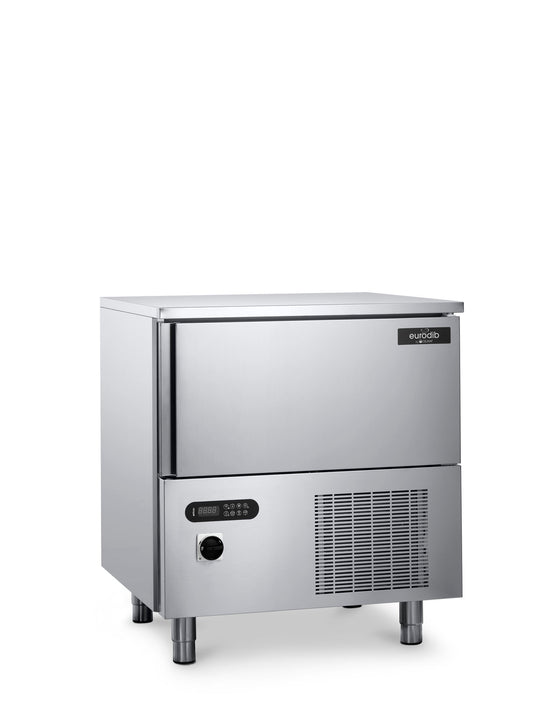
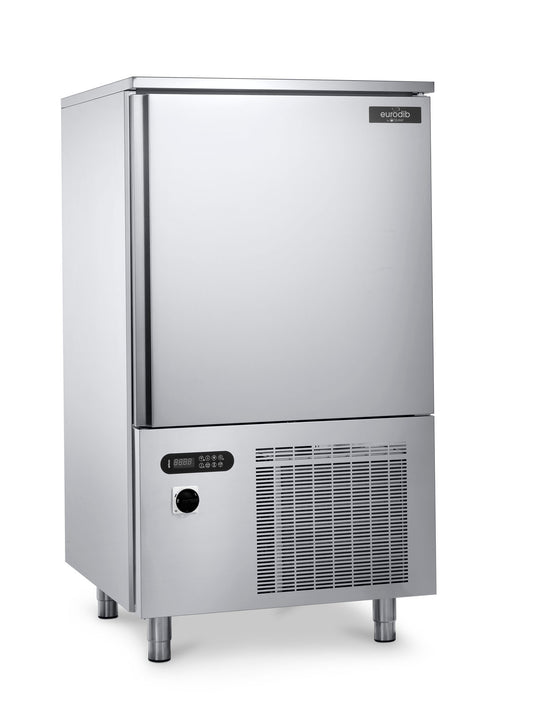
Collection: Blast Chillers

5 produits

Commercial blast chillers pull heat out of freshly cooked food fast, so soups, sauces, braises, rice and baked goods move through the danger zone quickly and go into storage at a safe temperature. They are the core of cook-chill production in catering, banquet, healthcare and institutional kitchens.

This collection brings together commercial blast chillers and blast chiller/freezers, from compact units for smaller kitchens to taller reach-in models for high-volume production. Compare tray capacity, chill and freeze cycles and electrical requirements on each listing.

Types of blast chillers

  • Compact blast chillers: Smaller units with fewer tray positions for cafés, pastry kitchens and smaller batches. Some run on a 115V circuit.
  • Reach-in blast chillers: Taller cabinets with more tray positions for full-size food pans or 18" x 26" sheet pans, for batch cooking and banquet production.
  • Blast chiller/freezers: Models that run freeze cycles as well as chill cycles, for longer storage of portioned food, pastry, par-baked bread and sauces.
  • Probe and programmable controls: Many models chill to the food's core temperature with a probe and store programs or recipes for repeat batches.

What to consider when choosing a blast chiller

  • Capacity per cycle: Size by the weight of your largest batch, not the tray count alone. Compare the manufacturer's chill capacity per cycle, and note that starting temperatures used for those ratings can differ between brands.
  • Chill or freeze: A chill cycle brings food down to refrigerator temperature for short-term storage; a freeze cycle takes it to freezer temperature. Check which cycles each model offers.
  • Pans and tray spacing: Check the pan formats and tray spacing on the listing. Shallow food pans and sheet pans chill fastest.
  • Core probe and controls: Probe-based cycles chill to core temperature rather than by the clock, and stored programs help keep results consistent.
  • Power and delivery: Check the voltage and whether the unit plugs in or is hardwired. Blast chillers are heavy and ship by freight, so confirm doorways, the delivery route and airflow clearance.

Related categories

Blast chiller FAQs

What does a blast chiller do?

It uses cold, fast-moving air to bring freshly cooked food down to refrigerator or freezer temperature quickly, so it can be stored safely for later service.

How fast should cooked food be cooled?

Canadian public health guidance commonly uses a two-stage rule: from 60°C (140°F) to 20°C (68°F) within 2 hours, then to 4°C (40°F) or colder within 4 more hours. Follow your local health authority.

Blast chiller or blast chiller/freezer?

A blast chiller brings cooked food to refrigerator temperature for short-term storage. A model with freeze cycles can also take food to freezer temperature for longer storage. Check the cycles listed on each product.

What electrical supply do I need?

It depends on the model. Some compact units run on 115V, while larger units need a higher-voltage circuit or a hardwired connection. Check the listing and plan the circuit with your electrician before delivery.

Prefer to talk it through? Find a Russell Hendrix representative.