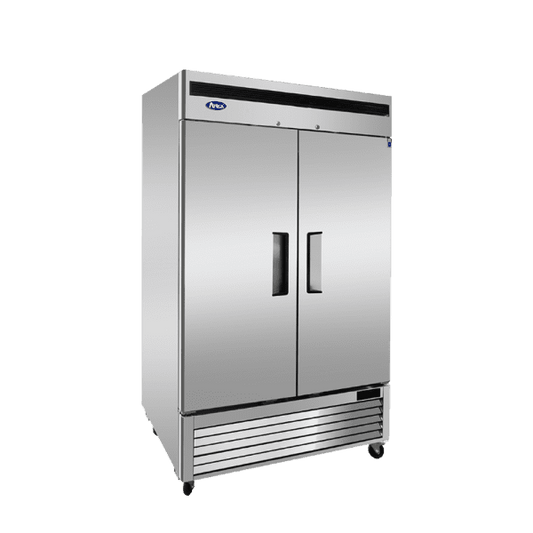
Shop commercial freezers for back-of-house storage, line support, retail display and production kitchens. This collection includes reach-in freezers, undercounter freezers, merchandising freezers, blast chillers and freezer parts and accessories so you can match the right frozen-storage format to your menu, footprint and workflow.
Whether you are holding bulk inventory, keeping frozen product close to the line or supporting cook-chill programs, use this page to compare freezer types by application, capacity and service style. Russell Hendrix can also help guide you to the right setup for your operation.
Frozen holding, food safety and efficiency
Commercial freezers play an important role in food safety, inventory protection and long-term product quality. Stable cabinet temperatures, effective door seals and consistent airflow all help keep frozen food properly stored through busy service periods.
When comparing models, look beyond cubic capacity alone. Footprint, door style, recovery performance, insulation and refrigerant all affect how well a freezer fits your operation and your utility budget over time.
What to compare before you buy
-
Capacity and product mix: estimate how much frozen inventory you carry and how quickly it turns over
-
Footprint and access: consider aisle clearance, door swing, drawer access and where frozen product is needed most
-
Application: decide whether you need bulk storage, line-side access, guest-facing merchandising or rapid chilling/freezing
-
Temperature recovery: busy kitchens benefit from units that recover quickly after frequent openings
-
Refrigerant and energy use: compare listed consumption and lower-GWP options such as R290 where relevant
Delivery and placement note for freight equipment
Many commercial freezers ship by freight carrier with standard door-to-door delivery. Inside placement, tailgate service and scheduled delivery may require advance request and additional coordination, so confirm your site conditions before ordering.
Frequently asked questions about commercial freezers
Which commercial freezer is best for a restaurant kitchen?
For many restaurant kitchens, a reach-in freezer is the main unit for bulk storage of proteins, prepared items and frozen ingredients. Undercounter freezers work well when smaller quantities need to stay close to the line, while merchandising freezers are better suited to retail-facing frozen product display.
How do I choose between a reach-in, undercounter and merchandising freezer?
Choose a reach-in for maximum back-of-house capacity, an undercounter freezer for point-of-use access, and a merchandising freezer for customer-facing display. If you need to cool or freeze food quickly after cooking, a blast chiller or shock freezer may be the better fit.
What temperature should a commercial freezer run at?
In most foodservice operations, commercial freezers are typically set to hold product at about -18 °C (0 °F) or lower to keep food safely frozen and support long-term quality.
What is the difference between a commercial freezer and a blast chiller?
A standard commercial freezer is designed to hold already-frozen food at a steady low temperature over time. A blast chiller or shock freezer is designed to pull heat out of hot or warm food quickly to support food safety, quality and cook-chill workflows.