
Commercial Immersion Blender Buying Guide
Commercial Immersion Blenders Buying Guide: Speed, Consistency, and Higher Output
Efficiency and producing the best possible quality product is at the top of any restaurant’s priority list—so any method that helps you reach those goals is always welcome.
There are many ways to prepare soups, sauces, foams, or purées. But as volume increases, consistency and throughput become harder to maintain—this is where a commercial immersion blender (stick blender) shines.
Use this guide to understand what you need (and why) to maximize your kitchen’s blending capabilities.
Specs vary by manufacturer/model. Always confirm max run time, shaft length, and electrical requirements before purchase.
Last updated: January 27, 2026
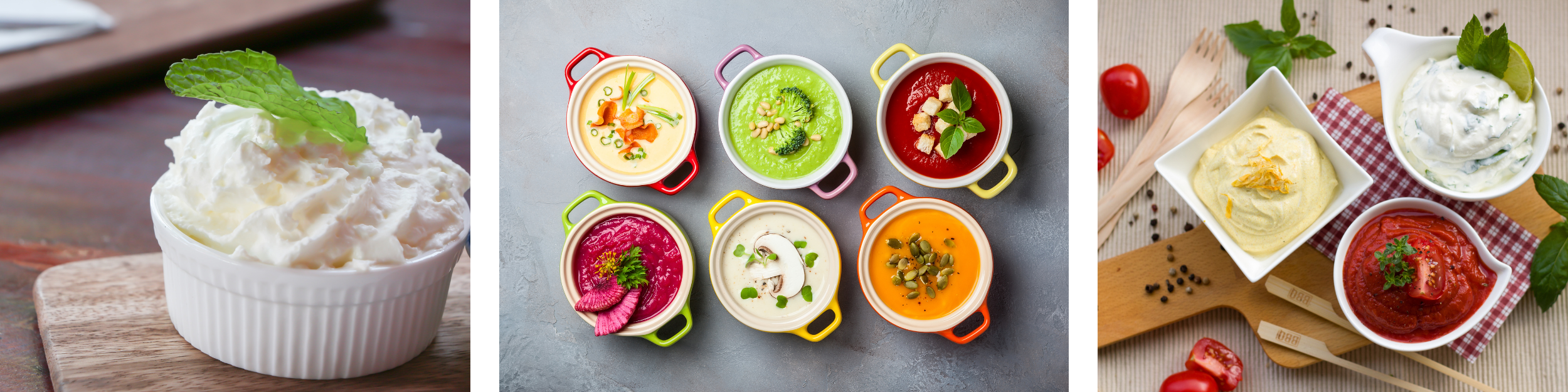
Benefits of Using an Immersion Blender
1) Precision
Immersion blenders range in size and power, often with multiple speed settings and attachments—giving you more control over texture for soups, sauces, purées, and emulsions.
2) Capacity
With a countertop blender, you’re limited by jar size and you often need to transfer product between containers. With an immersion blender, you can blend right in the pot you cooked in—making it possible to work with very large batches.
3) Efficiency
Stand-up blenders usually require multiple transfers that dirty containers and reduce yield. Immersion blenders help you keep food in the same pot and blend hot items as they cook.
4) Noise
Because the blade is submerged and many units have smaller motors than large jar blenders, immersion blending is often noticeably quieter.
5) Storage & Cleanup
Many models are easy to clean (especially removable shafts) and take up minimal storage space.

Features of Commercial Immersion Blenders to Consider
Handle / Grip
You’ll be holding the blender above (and in) a pot of hot product—comfort and control matter. Look for ergonomic grips that reduce fatigue and improve safety.
- Buttons vs dials: Buttons often make it easier to adjust with one hand.
- Reach & layout: Ensure on/off and speed controls feel natural and are easy to access.
- Weight & staff comfort: Avoid a unit that feels too heavy for your team—especially for long blends.
- Non-slip surfaces: Rubberized or textured grips help reduce slipping.

Immersion Blender Power
Commercial immersion blenders generally fall into three categories:
- Light-duty: ~200–350 watts, ~0.5 HP motor
- Standard-duty: ~200–600 watts, ~1–2 HP motor
- Heavy-duty: up to ~1,500 watts, ~2–3.5 HP motor
RPM ranges vary widely (often ~7,500 up to ~18,000 RPM) with on/off, two-speed, or variable-speed options. Also confirm maximum run time (continuous use limits) by model.
Electrical Requirements
Most commercial immersion blenders run on single-phase power, commonly 120–230V (model dependent), and are typically corded. Some options may offer removable cords or battery packs, but trade-offs can include added weight and reduced wattage.
Shaft Features
Shaft (blending arm) length can range from about 7” up to 29”. Shafts are typically stainless steel to handle hot/cold foods, resist warping, and clean easily. Many are detachable for simpler washing.
- Detachable shafts: Faster cleanup and easier sanitation.
- Splash guards: Help reduce splatter during blending.
- Interchangeable arms: Some systems let one motor fit multiple shaft lengths.

Blending Capacity
Capacity depends on motor power, shaft length, blade design, and the viscosity of what you’re blending. Light-duty units may top out at small volumes, while heavy-duty units can handle very large batches.
Choose based on what you prep daily. Oversizing can add weight and fatigue, while undersizing can slow output and limit menu flexibility.
Quick Compare (what matters most)
| Duty | Best for | Typical benefits | Watch-outs |
|---|---|---|---|
| Light-duty | Small batches, occasional use | Lower cost, lighter weight | Not ideal for heavy viscosity or long runs |
| Standard-duty | Most restaurants: soups/sauces daily | Good balance of power + control | Confirm run time for back-to-back batches |
| Heavy-duty | High volume, frequent daily batches | Faster blending, handles thicker product | Heavier; may need grips/clamps for safety |
Additional Features and Accessories
Accessories can expand what your immersion blender can do—sometimes replacing other tools and saving space.
Blade Guard
Blade guards vary in width and vent size. Wider, shallower guards with larger vents often circulate food more effectively (stronger vortex), improving blend speed and consistency. They can also be easier to clean—but may leave blades more exposed, so extra care is required.

Whisk Attachment
Best for batters and egg-based mixtures, whipped cream, foams, and other light aerated preparations.
Clamps or Additional Grips
Heavy-duty blenders can be tiring (and sometimes risky) to hold one-handed over a pot of hot product. Secondary grips and clamps can increase control and reduce fatigue.
- Extra handles: Side loops, overhead handles, or stabilizing grips help with leverage.
- Clamps: Lock the blender to a pot or container to improve safety and ease of use.
- Sliding frames: Let you move the blender along a pot/bowl diameter for consistent blending.

Wall Racks / Hangers
Provide a safe, organized way to store your immersion blender (especially helpful if you have multiple units).
By adding a commercial immersion blender, you’ll improve blending output and consistency. With the right attachments, you can also reduce clutter by replacing less efficient tools that take up valuable kitchen space.
Written by Jared Hochman
Quick Picker (Immersion Blender Sizing)
Tip: If you regularly blend hot product in deep stock pots, prioritize the right shaft length and add splash control for safer, cleaner use.
FAQs
- What’s the biggest advantage of an immersion blender vs a countertop blender?
- Immersion blenders let you blend directly in the pot (less transferring, fewer containers, faster workflow) and they scale better for larger batches.
- How do I choose the right shaft length?
- Choose a shaft long enough to reach near the bottom of your deepest pot while keeping your hands safely above hot product. Deep stock pots usually require longer shafts.
- Light-duty vs standard-duty vs heavy-duty—what should I buy?
- Light-duty is for smaller batches and occasional use. Standard-duty is the best fit for most kitchens using it daily. Heavy-duty is for high volume, thicker product, and frequent daily batches.
- Do I need a whisk attachment?
- If you make foams, whipped cream, egg-based mixes, or lighter aerated preparations, a whisk attachment can be a big efficiency upgrade.
- What accessories improve safety?
- Splash guards reduce splatter, and clamps/secondary grips improve control—especially for heavy-duty units or long blending sessions.
Shop our selection of Commercial Immersion Blenders
© RussellHendrix — Commercial Immersion Blenders Buying Guide
