
Bakery Display Cases Buying Guide
Commercial Waffle Maker Buying Guide
Who doesn’t love waffles? Soaked in syrup or topped with fruit, chocolate, and whipped cream, these fluffy creations are truly heaven-sent. Their combined gustatory merit and culinary versatility mean they’re a staple on most menus. Sweet or savoury, waffles are a crave-worthy delight from coast to coast.
Enjoying waffles is easy. Making them consistently at peak service is where the right commercial waffle maker matters. Use this guide to choose the best waffle maker for your operation, output, and menu.
For Canadian foodservice. Focus on workflow, consistency, cleaning, and electrical fit.
Last updated: January 21, 2026

How to use this guide
- Style-first: the grid/plate defines what you can serve.
- Output-second: capacity is about peak waffles/hour and plating (1 vs 2 waffles per order).
- Operations-third: cleaning time, station flow, and electrical fit make or break consistency.
- Waffle type: Belgian / classic / bubble / (specialty styles as needed).
- Peak demand: estimate waffles per hour at your busiest 60 minutes.
- Plating: 1 waffle vs 2 waffles per order (cooling risk).
- Controls: stable temp + clear ready indicators.
- Allergens: separate units if you can’t reliably deep-clean between batters.
- Electrical: confirm voltage and dedicated circuits where required.
What we considered: station speed, repeatable browning, plate style, ease of cleaning, and kitchen power constraints.
Consistency Rush-hour throughput Allergen control CleanabilityTypes of Waffles
If you picture a waffle, you probably have a distinct type in mind based on what you’re used to eating. Maybe they’re thin and crispy with syrup, or maybe they’re thick and fluffy with fruit and whipped cream. Do you know what type you want to serve?
- Belgian waffles: light and fluffy with deeper pockets for toppings (often rectangular; sometimes round/sectioned).
- Traditional waffles: thinner and crispier with shallower pockets (great for classic butter and syrup).
- Bubble waffles: Hong Kong-style “bubble” texture; typically served rolled and topped for dessert.
- Liége waffles: denser, sweeter Belgian waffle with irregular edges.
- Waffle cones: thin grids designed to roll into cones for ice cream service. These typically require a dedicated cone-style iron.

Waffles vary in terms of both batter type and the specific waffle maker used; you can’t use one waffle maker to make both Belgian and bubble waffles.
Remember that waffles are a versatile base: they can transition from breakfast to dinner and even dessert. Many operations also use waffle makers for items like hashbrowns and savoury specials (if your cleaning/allergen workflow supports it).
Recommended waffle makers (examples at Russell Hendrix)
Examples below are validated against our current product export (Active + Published items only).
- Belgian (single): Waring Single Belgian Waffle Maker, 1200W, 120V — WW180X
- Belgian (higher volume / faster workflow): Waring Double Vertical Belgian Waffle Maker, 1400W, 120V — WW200
- Belgian (compact / portion control): Waring Mini Belgian Waffle Maker, 1200W, 120V — WMB400X
- Bubble waffles: Waring Bubble Waffle Maker, 120V — WBW300X
Batter Considerations
If you have a specific type of batter you want to use, that will determine which waffle maker is best for your kitchen. Alternately, the type of waffle maker you choose will determine which batter(s) work best.
If you’re going to be making two or more types of waffles, then you’ll likely need two separate waffle makers. If you’re going to be cooking more than just waffles in your waffle maker, you might need two waffle irons unless you’re willing to clean it between orders. Even if you are using two different batters for food allergy purposes — separate units may be required.

Sizes and Capacity of Waffle Makers
No waffle maker guide would be complete without talking about size and capacity. Waffles can come in many shapes and sizes, so make sure you know what type you’ll be serving.
From mini waffles to bubble waffles, you’ve got decisions to make. Some waffle makers feature removable plates, but swapping plates in a busy kitchen is often too slow. Sticking with one size/shape keeps workflow faster and training simpler.
Some waffle makers produce one waffle per cycle, while others produce two at a time. Single units often land around 20–30 waffles per hour; doubles can increase output depending on cook time and recovery.

Capacity estimator (peak planning)
Planning estimate only. Real output depends on recovery, batter portioning, and operator flow.
| Input | Value |
|---|---|
Quick Compare (single vs double)
| Choice | Pick this when | You get | Trade-off |
|---|---|---|---|
| Single | Lower peak volume; waffles are occasional | Small footprint; simpler station | Lower throughput at rush |
| Double (2 plates) | Brunch service; high peak; 2 waffles/plate | Better throughput; faster plating | More counter space + power planning |
Controls and Features
Waffle makers are offering more features to keep up with busy kitchens. Every waffle maker should have a handle that’s safe to maneuver, indicator lights, consistent plates/grids, and temperature controls.
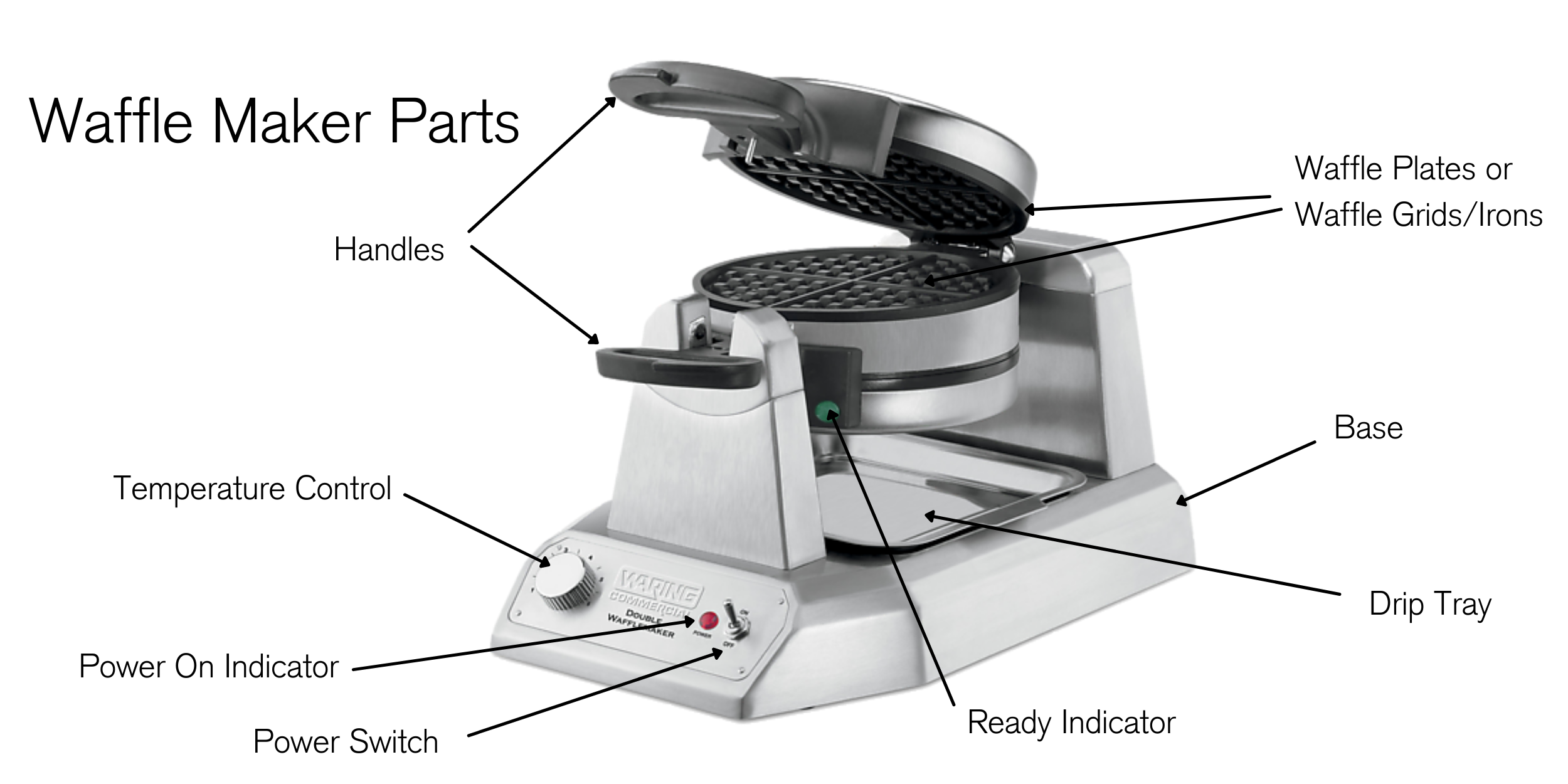
Important features and controls to consider:
- Rotary feature: flip mid-cook for even browning.
- Drip trays: reduce batter mess and cleanup time during rush.
- Controls: on/off, timers, ready indicators, and temperature control are the “must haves.”
- Voltage: confirm your kitchen power. Some high-output units require different power than a typical 120V countertop plug.
- Portioning tools: measuring cups/dispensers reduce waste and improve consistency.
- Removable plates: can speed cleaning depending on the model.
Helpful accessory (example at Russell Hendrix)
Cleaning Your Waffle Iron
You’re going to be cleaning these machines regularly, so choose a waffle maker that’s heavy-duty but also easy to clean. Removable grids can make cleaning easier, however all commercial waffle makers must be cleaned thoroughly to meet health unit guidelines.
Waffle iron plates or grids can be made from cast aluminum, cast steel, cast iron, or non-stick coated materials; how to clean them will depend on what they’re made of (always follow the manufacturer’s guide to avoid scratching or damaging the surface).

Waffle Iron Materials
In terms of waffle iron materials, your options include:
Cast Aluminum: fast preheat and fast bake, but softer and easier to dent/scratch; typically hand-wash only.
Cast Steel: stronger and can handle dings and scratches; may take longer to heat, but distributes heat well.
Cast Iron: very durable with great heat retention; may require regular seasoning to maintain non-stick performance.
Non-Stick: easier release and consistent results; coatings need gentle tools and careful cleaning.

FAQs
- Can I use one waffle maker for Belgian and bubble waffles?
- Usually no. Plate patterns are style-specific, and swapping plates during service is typically too slow for peak operations.
- Should I choose a single or double waffle maker?
- Base it on peak waffles per hour and servings per plate. Two-plate units often improve peak flow and help prevent waffles cooling while waiting for the next batch.
- What features matter most for consistency?
- Stable temperature control, strong recovery between batches, and clear “ready” indicators. Rotary flip helps on some styles where browning consistency is key.
- How should I handle allergens or sweet vs savoury batters?
- If you can’t reliably deep-clean between batters, use separate units. It’s often the simplest way to stay fast and compliant.
The right waffle maker depends on your menu style, rush-hour volume, and the cleaning workflow you can support. If you want help narrowing it down, we’ll size it to your operation.
Talk to an Equipment Specialist — we’ll match a waffle maker to your menu and volume
Prefer to browse first? Search: Waffle makers on russellhendrix.com
© Russell Hendrix — Commercial Waffle Maker Buying Guide
