
Foodservice Cleaning Brushes Buying Guide
Commercial Cleaning Brushes Buying Guide
Cleanliness and proper hygiene are a cornerstone of foodservice. Customers rely on it, and teams need the right tools to keep kitchens and washrooms safe, healthy, and inspection-ready.
Cleaning brushes are simple, necessary tools — and the “right” brush depends on three things: bristles, shape, and handle.
Last updated: January 29, 2026
Quick Picker: Choose the Right Brush Faster
Cleaning Brush Bristles
Short bristles are best for scrubbing. Long bristles are best for delicate work and reaching into tight spaces.
Synthetic fibre bristles
Synthetic fibres (often nylon, polypropylene, or polyester) are the most popular in foodservice because they’re durable, chemical resistant, and economical.
Natural fibre bristles
Natural fibres have strong heat resistance and can be used for delicate jobs (soft bristles) or tougher scrubbing (short, tightly packed bristles).
Wire filament bristles
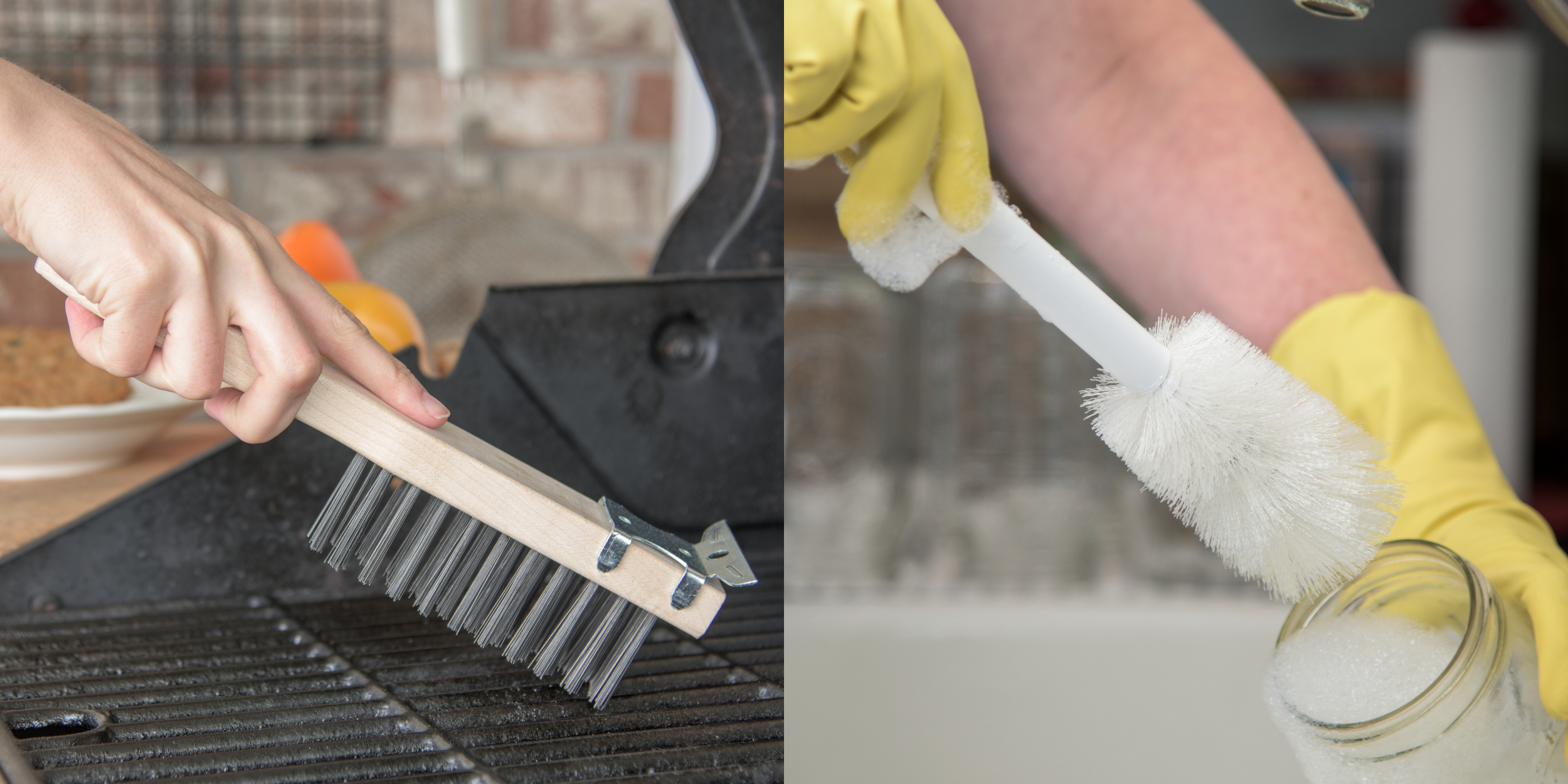
Wire bristles (stainless or carbon steel) withstand high heat and are used for aggressive cleaning like grills and rust removal.

Cleaning Brush Shapes
Most foodservice brushes fall into two categories: tube brushes and flat scrub brushes.
Circular (Tube) Brushes
Tube brushes are designed for drains, lines, bottles, carafes, and other cylindrical areas. For best results, choose a brush diameter that’s slightly larger than the tube you’re cleaning so the bristles maintain full contact.
If the brush is too small, you’ll need multiple passes. Too large and you risk damaging bristles or getting stuck.

Flat (Scrub) Brushes
Flat scrub brushes handle flat, curved, and large open surfaces. Consider bristle trim angle (how bristles are cut) — angled trims help keep consistent bristle contact on curved surfaces and corners.

Cleaning Brush Handles
A good grip matters. Handle length can be the difference between safely reaching a corner (fridge/freezer, floor edges) and risky stretching or climbing.
- Long handles: Better reach, less strain, safer cleaning for floors and large equipment.
- Angled / T-handles: Added leverage for tougher scrubbing.
- Ergonomics: Choose the most comfortable option when possible — staff fatigue is real in high-frequency cleaning.
- Material: Most handles are plastic for easy cleaning; high-heat specialty brushes may use wood handles.
Cleaning Brush Uses and Zone Separation
Brushes are used primarily in two high-risk zones: kitchens and restrooms. Tools should not cross zones. Consider a simple, colour-coded system and train staff consistently.
Kitchen Cleaning Brushes
Kitchens use everything from food-prep brushes to heavy-duty equipment scrubbers. Common kitchen brush types include:
- Vegetable brushes
- Nail cleaning brush (employee handwash sink)
- Cutting board brushes
- Dish brushes
- Bottle / jar brushes
- Carafe cleaners
- Refrigerator coil cleaning brushes
- Grill / BBQ brushes
- Scraper brushes
- Coffee pot brush
- Tank / kettle cleaning brush
- Grout scrubbers

For pastry and basting brush guidance, see: Ultimate Pastry Brush Buying Guide.
Bathroom and Janitorial Cleaning Brushes
Consider keeping a dedicated janitorial cart for restroom cleaning to organize and contain high-risk cleaning tools. Common restroom brush types include:
- Utility scrub brushes
- Tile and grout brush
- Toilet brush
- Dusting brushes
Brush Inspection, Cleaning, and Sanitizing
To keep brushes effective (and avoid spreading soil), inspect, clean, and sanitize regularly:
- Rinse bristles: Use hot water to remove loose debris.
- Wash: Rub bristles with cleanser; focus at the base where debris hides.
- Sanitize and rinse: Follow your sanitizer instructions.
- Dry properly: Leave brushes in a clean place to fully dry before storage.
- Replace as needed: If bristles spread, break, or won’t bounce back, swap it out.
Why using the right cleaning brush matters
Food safety, employee safety, operational efficiency, and customer trust all improve when the right brush is used for the right job. A dirty washroom or sticky floor makes customers question what they can’t see — including the kitchen.
Keep customers coming back for the great food and dazzle them with your sparkling clean business.
Written by Breanne Baker
FAQs
- What bristle type is best for most commercial kitchens?
- Synthetic fibre bristles (nylon, polypropylene, polyester) are most common because they’re durable, chemical resistant, and cost effective.
- When should I use wire bristles?
- Wire bristles are best for high-heat, aggressive cleaning tasks like grills and rust removal. They’re not for delicate surfaces.
- How do I choose the correct tube brush size?
- Pick a brush diameter that’s slightly larger than the tube/drain so the bristles maintain full contact. Too small requires extra passes; too large can damage bristles or get stuck.
- Should kitchen and restroom brushes be stored together?
- No. Treat restrooms as a high-risk zone. Keep restroom tools separate from kitchen tools and consider a simple colour-coding system with staff training and signage.
- How do I know when a brush should be replaced?
- Replace brushes when bristles spread out, break, lose their “bounce back,” or if the brush can’t be properly cleaned and sanitized.
Shop our entire collection of cleaning brushes
© Russell Hendrix — Commercial Cleaning Brushes Buying Guide
