
Commercial Countertop Food Warmers Buying Guide
Choose the Right Countertop Food Warmer to Hold Safely, Serve Faster, and Protect Quality
In a busy kitchen, it’s not realistic to cook every component entirely to order. Countertop warmers help you keep prepared foods hot and ready for service—without sacrificing texture, flavour, or food safety.
The key is avoiding the food-safety “danger zone” (roughly 41°F–135°F / 5°C–57°C) where bacteria can grow. Countertop holding equipment is built to keep foods above safe holding temps while preserving quality.
Use this buying guide to choose the right warmer type (wet vs dry), the right controls (thermostat vs rheostat), and the right configuration for back-of-house or front-of-house.
Product examples below link to stocked Russell Hendrix items where available. If you’re unsure about compliance or your specific workflow, talk to a specialist.
Last updated: January 23, 2026

Types of Commercial Countertop Warmers Explained
Countertop hot-holding equipment generally falls into two buckets: food warmers (hold already-hot foods) and rethermalizers (heat chilled/frozen foods up to a safe holding temperature). You’ll also see warmers categorized by wet heat vs dry heat, and by control type (thermostat vs rheostat).
Food Warmers vs Rethermalizers
Food warmers are designed to hold prepared hot foods at safe temperatures. They’re not intended to safely heat cold foods from refrigerated or frozen states.
Rethermalizers can reheat chilled or frozen foods quickly up through the danger zone to safe holding temperatures. In practice, rethermalizers can also serve as food warmers—making them a strong option for commissary kitchens, caterers, and high-throughput operations.
Wet Heat vs Dry Heat
Wet heat (water bath / bain-marie) is ideal for foods where moisture retention matters: soups, gravies, sauces, chili, queso, and stews. It provides gentle, even heating and reduces scorching.
Dry heat is better for foods where texture matters: fries, taquitos, pizza slices, and crisped items. Dry heat is commonly delivered via heat lamps and strip heaters over a pass or holding area.
Thermostat vs Rheostat Controls
Thermostatic controls let you set a temperature and the unit works to maintain it—more consistent and easier for multi-staff operations.
Rheostat controls are essentially manual dials. They’re simple and common, but require operator attention to prevent over-heating or drying/scorching.
Countertop Food Warmers for Back of House
Back-of-house warmers prioritize function, speed, and consistency. Think line holding, prep staging, pass-through, and keeping key components hot during rush.
Round Soup Warmers (wet heat)
Ideal for soups, chili, cheese sauce, gravy, and other ladle-and-serve items. Round warmers typically use wet operation to keep product from drying out.

Round Rethermalizers (heat from chilled/frozen)
If you bulk-prep and chill/freeze soups, sauces, or stews, a rethermalizer can reheat quickly and then hold at safe temperatures. Great for caterers, commissaries, and multi-unit kitchens.
- Vollrath Cayenne Round Heat ’N Serve Rethermalizer (7 qt)
- Nemco Round Cooker/Warmer (7 qt)
- Nemco Round Cooker/Warmer (11 qt)
Heat Lamps (short-term holding on the pass)
Heat lamps are built for short holding windows—the gap between plating and pickup. They help keep food hot from above without tying up oven or range space.
Browse heat lamps & accessories
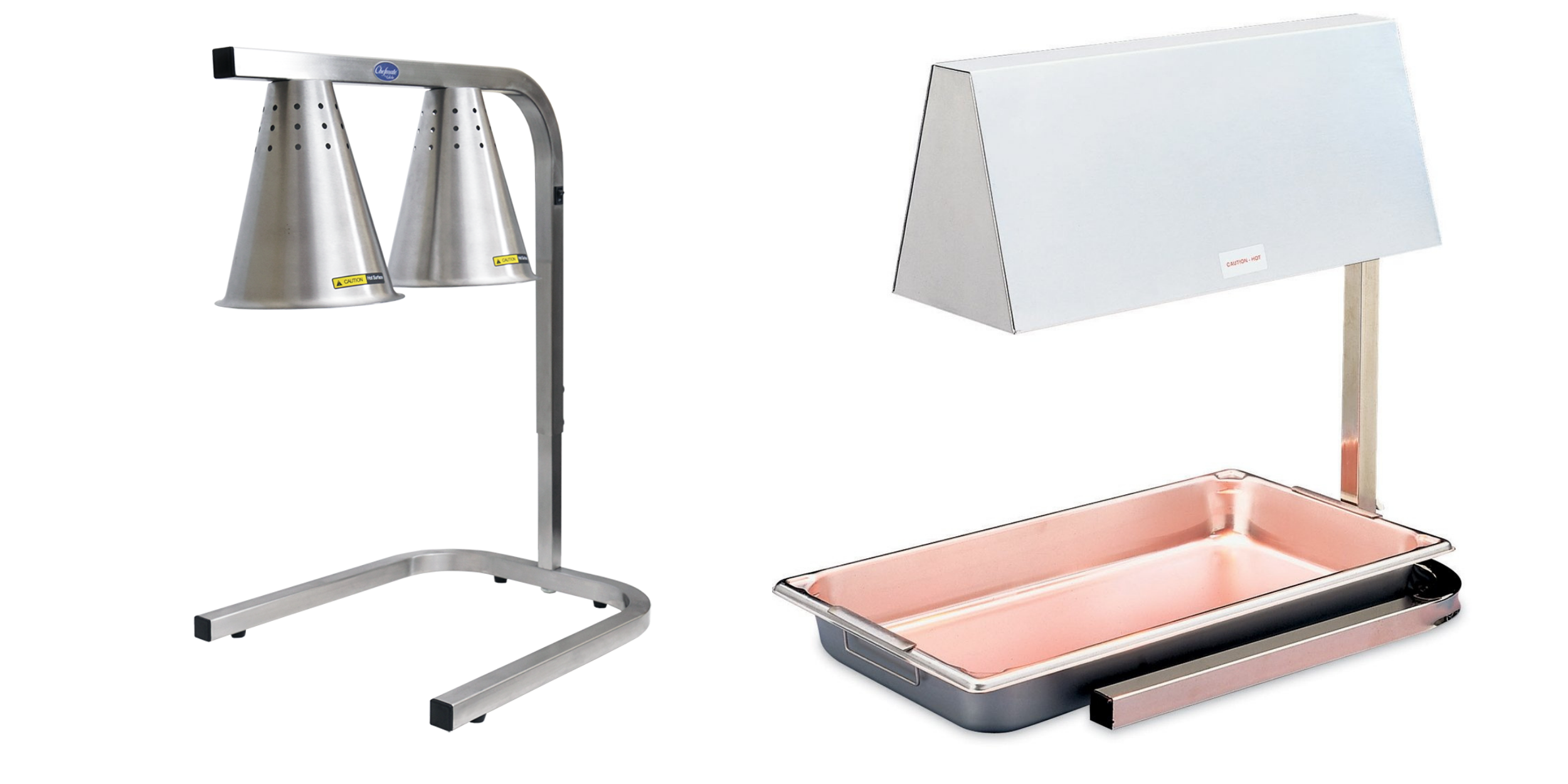
Strip Heaters (even dry heat over a holding area)
Strip heaters provide a consistent band of heat over a pass, expo shelf, carving station, or holding zone. They’re a go-to for keeping plated food warm during pickup windows.
- Vollrath Cayenne Heat Strip (Hardwired, 24")
- Vollrath Cayenne Heat Strip (Hardwired, 36")
- Vollrath Cayenne Heat Strip (Plug-In, 48")
- Hatco Glo-Ray Infrared Strip Heater (36")

Drawer Warmers (multi-item holding, less drying, less flavour transfer)
Drawer warmers are excellent when you need to hold multiple items at once (and want less risk of flavour transfer). Great for rolls, proteins, sides, and staging during service.
Countertop Food Warmers for Front of House
Front-of-house warmers need to do two jobs: hold safely and present well. Think self-serve counters, convenience areas, food halls, and quick-serve pickup zones.
Round Warmers (soup / chili / queso station)
For grab-and-go soup programs or served soup stations, round warmers are compact and guest-friendly—especially with proper signage and ladle setups.
Heated Merchandisers / Display Warmers
For pizza slices, pretzels, samosas, baked snacks, and warm packaged items, heated merchandisers let guests see the product while keeping it hot and ready.
Browse heated merchandisers & display warmers

Other Considerations Before You Buy
1) Capacity & configuration
Start with what you’re holding: pans (full / fractional), round insets, or drawers. Then plan capacity based on peak throughput (rush windows), not average volume.
2) Wet vs dry holding (match the food)
Wet heat protects moisture-heavy foods; dry heat preserves crispness. If your menu includes both, you may need two holding approaches.
3) Control type
Thermostats are easier for teams and more consistent. Rheostats are simple but need attention to avoid over-heating or scorching.
4) Power & placement
Confirm outlet access (cord length), amperage, and whether hardwiring is required. Also plan staff reach and traffic flow: left/right access, counter depth, and pass-through needs.
5) Cleanup & maintenance
Look for removable insets, durable stainless housings, and designs that reduce buildup. Wet units should be drained/cleaned on a routine schedule.
Quick Compare (what matters most)
| Equipment | Best for | Strength | Watch-outs |
|---|---|---|---|
| Food warmer (wet) | Hot soups, sauces, chili, queso | Gentle heat, less scorching, moisture retention | Not for reheating cold product safely |
| Rethermalizer | Chilled/frozen soups, stews, sauces | Heats through danger zone faster, then holds | More expensive; confirm workflow + timing |
| Heat lamp | Short pickup windows on the pass | Fast, flexible, no water | Can dry out food if held too long |
| Strip heater | Even dry heat over holding areas | Consistent coverage for expo/pickup | Hardwired models need install planning |
| Drawer warmer | Multi-item holding, buns/sides/proteins | Separate cavities reduce transfer, better humidity control | Footprint + capacity planning matters |
Quick Picker (Warmers & Rethermalizers)
Tip: If you’re reheating chilled/frozen foods, choose a rethermalizer (not a basic warmer) to reduce time spent in the danger zone.
Recommended Picks (Stocked Examples at Russell Hendrix)
Round soup warmers (wet heat)
Round rethermalizers (reheat + hold)
Dry heat holding (pass / pickup)
Need a full-size pan warmer?
Availability varies by size and configuration. Use search to browse current options:
Food Safety & Care
Hot-holding is about protecting guests and protecting quality. A few habits that help:
- Confirm safe holding temps: Train staff to verify temps with a thermometer—not just the dial.
- Don’t reheat in a warmer: If product starts cold, use a rethermalizer or approved reheating method.
- Wet units need routine cleaning: Drain, wipe, and clean insets to prevent buildup and odours.
- Protect crisp foods: Use dry heat and limit holding time to avoid sogginess.
- Plan for power and airflow: Keep cords safe and maintain clearances per manufacturer guidance.
FAQs
- What’s the difference between a food warmer and a rethermalizer?
- Food warmers hold already-hot foods. Rethermalizers can heat chilled/frozen foods up to safe holding temperatures and then hold.
- Should I choose wet heat or dry heat?
- Use wet heat for soups/sauces where moisture matters. Use dry heat (lamps/strip heaters) for fries, pizza slices, and crisp foods.
- Thermostat vs rheostat: which is better?
- Thermostats maintain a set temperature automatically (more consistent). Rheostats are manual and may require more attention to avoid scorching or drying.
- Can I heat cold food in a countertop warmer?
- Generally, no—basic warmers aren’t designed for safely heating cold product through the danger zone. If you need reheating, choose a rethermalizer.
- How do I choose the right size?
- Match the unit to your containers (pans, round insets, drawers) and size it for peak volume during rush periods—not average volume.
Talk to an Equipment Specialist — we’ll match the right warmer to your menu and service flow
© Russell Hendrix — Commercial Countertop Food Warmers Buying Guide
