
Bun Pan and Rack Buying Guide
Commercial Bun Pans and Bun Pan Racks Buying Guide
We like to bake buns and we cannot lie. And cookies and roast veggies and toast hazelnuts and cook pounds and pounds of bacon. All of it is possible with one kitchen essential — a bun pan.
Bun pans (sheet pans / cookie sheets / baking sheets) are a foodservice workhorse. Add liners and bun pan racks, and you’ve got a system that can bake, roast, cool, store, stack, and roll day after day.
Last updated: January 27, 2026

What is a Bun Pan?
At its most basic, a bun pan is a flat sheet of metal designed for high-temperature oven use. Depending on its purpose, it may have one or more upturned edges.
Bun pans / sheet pans / baking sheets usually have four upturned edges, which makes them ideal for a wide range of kitchen tasks (baking, roasting, holding, staging, and more).
Cookie sheets are sometimes used interchangeably in conversation, but they typically have one upturned edge so cookies can slide off easily onto a cooling rack.
Bun Pan Sizes
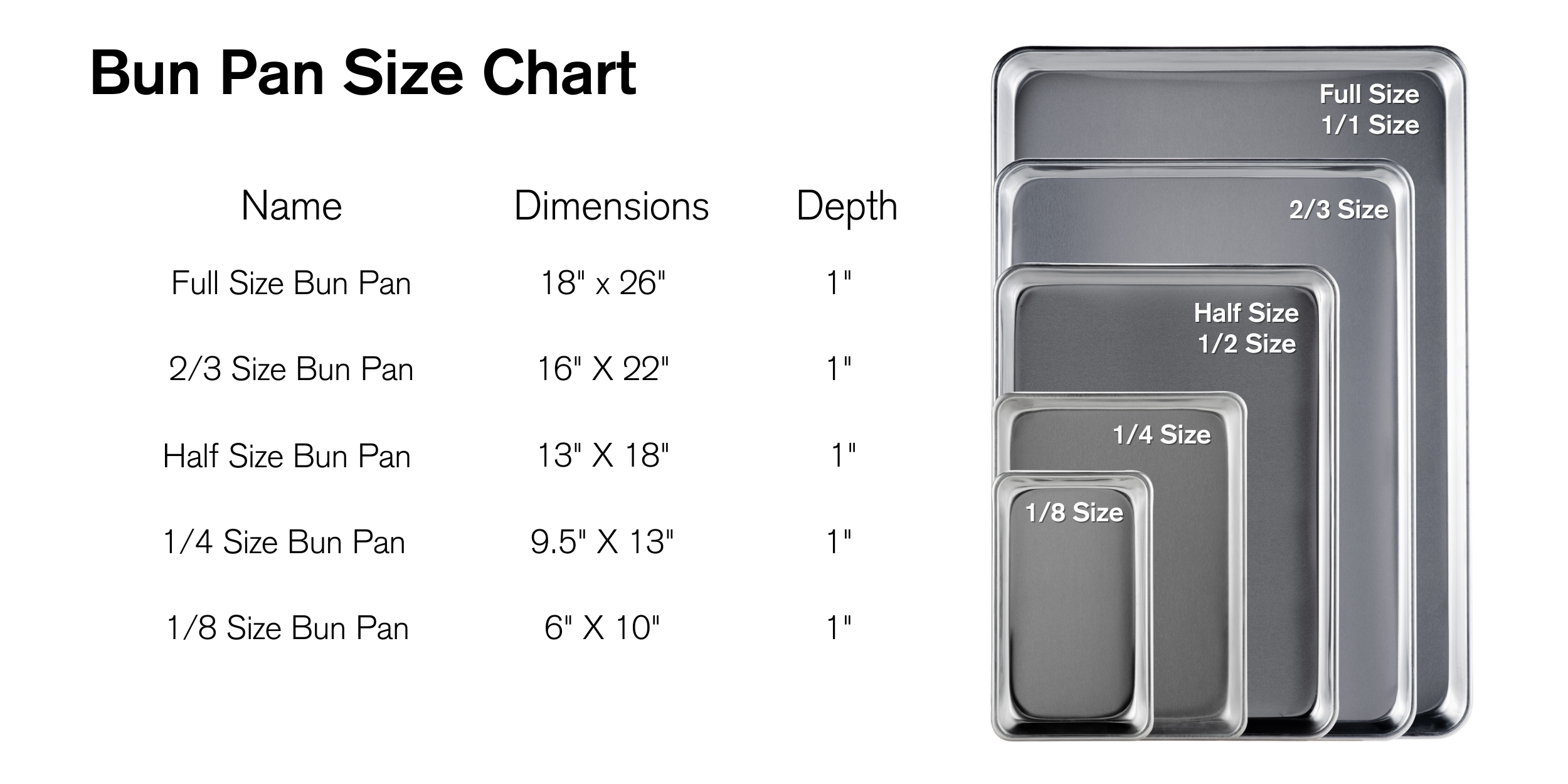
Commercial bun pans are standardized, which makes them easy to use across kitchens and equipment. The size you need depends on your ovens, what you’re making, and how you need to store pans (and finished product).
Most bun pans are about 1” deep.
Bun Pan Materials
Aluminum
Aluminum is the top choice for many chefs and bakers because it conducts heat efficiently—pans heat up and cool down quickly. Its naturally light colour supports minimal browning and consistent results.
- Avoid scratching: don’t cut directly on the pan—use a cutting board.
- Watch acidic foods: long contact can cause discolouration/pitting.
- Liners help: improve release and make cleanup easier.
Stainless Steel
Stainless steel is extremely durable and stain-resistant, and it looks good even after repeated use—useful when pans go from oven to display. The trade-off is that stainless steel is a poorer heat conductor than aluminum.
Nonstick Coated
Nonstick pans are typically aluminum with a coating applied to the interior. They can reduce the amount of fats/oils needed and improve release. Nonstick pans are often darker, which can lead to crispier, more browned crusts—bake times and/or temperatures may need adjusting.
Nonstick requires more care to prevent damaging the coating.
Bun Pan Features
Gauge
Gauge refers to metal thickness. The lower the gauge number, the thicker the metal (yes, it’s backwards). Thicker pans are generally more durable and less prone to warping, scratching, and denting.
Edges
There are multiple edge types—each with pros and cons.

Flat / Rimless
These sheets have no rims (or at least one side with no rim), making it easy to slide baked goods onto a cooling rack or displayware. Rimless sheets have limited use because they can’t contain batters or liquids.
Tapered
Angled edges help contain liquids and allow pans of the same size to stack—helpful for space savings.
Rolled
The edge is rolled under (often with tapered sides). Rolled edges increase stability and help pans hold shape after repeated use.
Rolled Wire Filled
Wire rolled into the edge adds even more stability and helps reduce warping in high-volume conditions. These may be referred to as wire-rimmed bun pans.
Open
The edge is curled and left open. This supports shape retention and makes cleaning easier because food is less likely to get trapped.
Solid vs Perforated
Solid bun pans are the everyday go-to because they’re versatile. Perforated pans (holes in the bottom) promote airflow and are popular for crisper results. Increased airflow can also slightly reduce bake times.

What are Bun Pan Racks?
Pan rack, roll rack, rolling kitchen rack, bread rack, sheet rack, sheet pan rack—lots of names for a kitchen favourite. Designed to hold full size and half size bun pans for storage and transport, these are a major space saver.
Bun pan racks can be mobile or stationary and come in a variety of sizes and styles.
Bun Pan Rack Sizes
Rack sizes are standardized to match pan sizes. There may be slight manufacturer variations, but there are two main rack sizes:
- Half Size: 26” high × 20” wide × 26” deep
- Full Size: 69” high × 20” wide × 26” deep
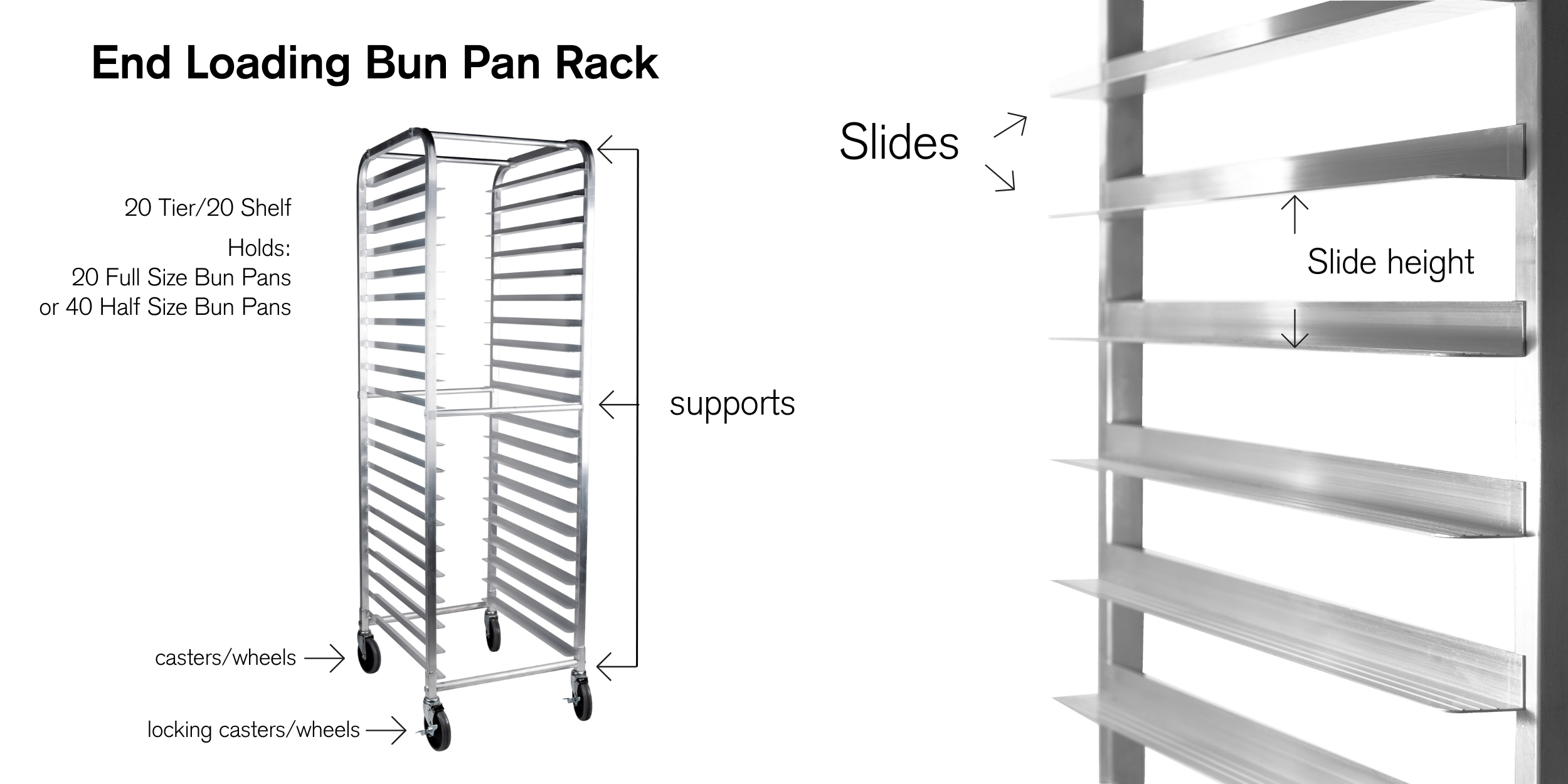
The number of pans a rack holds is usually evident in the product name (20 pan / 40 pan / 20 tier / 10 tier). The number indicates how many full size trays it can hold based on slide count and slide spacing.
Important: “20 pan” assumes the food on each pan fits within the slide spacing. Tall product can reduce usable capacity.
Bun Pan Rack Materials, Features, and Accessories
Rack Materials
- Aluminum: Lightweight, durable, cost-effective for many operations.
- Stainless Steel: Extremely durable and easy to clean; often higher weight capacity; higher cost.
- Plastic: Strong and popular in some operations; rounded corners and bumpers help protect walls and equipment.
Loading
End loading means the opening is on the short side. Side loading means the opening is on the long side. Side loading can be especially convenient for catering and full-size pan workflows.
Supports
Stability is influenced by how many supports a rack has and where they’re placed. For full size racks, a common guideline is a minimum of 6 supports (often top/middle/bottom).
Always confirm total rack capacity and per-shelf capacity in the manufacturer’s specifications.
Casters
Casters (wheels) make transport easier and safer. Larger wheels improve stability and roll better across mixed floor types. Non-marking wheels help keep floors clean and reduce noise.
- Use at least two locking casters for safety and stability.
- Rack weight capacity is heavily influenced by caster strength (and shelf/slide strength).
- Some racks are available without casters for permanent placement or to fit inside reach-in refrigeration.
Bun Pan Rack Covers
Rack covers protect foods from debris/contamination and can help with proofing by reducing drafts and supporting humidity. Clear covers improve visibility; zippers make access easy.
Packaging
Roll racks may ship assembled or unassembled. Unassembled racks are often more cost-effective if you have the time/labour to assemble on-site.

Chef Tips for Using Bun Pans and Bun Pan Racks
- Remove food from pans before cutting.
- Allow pans to cool completely before washing.
- Hand wash only to maintain quality.
- Use bun pan liners for even results and easier cleanup.
- Use silicone bun pan liners for sustainability.
- Fill a rack from top to bottom to reduce chance of contamination onto the pan contents below.
- Whenever possible, put the heaviest bun pans closer to the bottom for safety.
- Adhere to the maximum weight capacity per shelf on the rack.
Quick Picker (Bun Pans + Rack Setup)
Tip: If warping is a recurring issue, prioritize thicker gauge pans and reinforced edges (rolled or wire-filled), and avoid thermal shock (hot pan → cold water).
FAQs
- What’s the difference between a bun pan and a cookie sheet?
- Bun pans/sheet pans typically have four upturned edges for versatility. Cookie sheets often have one upturned edge so you can slide cookies off easily.
- Does gauge matter?
- Yes. Lower gauge = thicker metal. Thicker pans are generally more durable and less prone to warping and denting under heavy use.
- When should I choose perforated pans?
- Choose perforated when airflow matters and you want crisper results (common in baking). Choose solid for maximum versatility (batters, roasting, staging).
- Why use bun pan liners?
- Liners improve release, protect pans (especially with acidic foods), and reduce cleanup time. Silicone liners can also be a more sustainable option.
- How do I pick a bun pan rack size?
- Match rack size to pan size. Most operations choose full size or half size racks. Confirm slide spacing if you’ll be holding tall product.
- What’s the benefit of a rack cover?
- Covers help protect food from debris and contamination and can support proofing by reducing drafts and helping maintain humidity.
© RussellHendrix — Commercial Bun Pans and Bun Pan Racks Buying Guide
